Full description
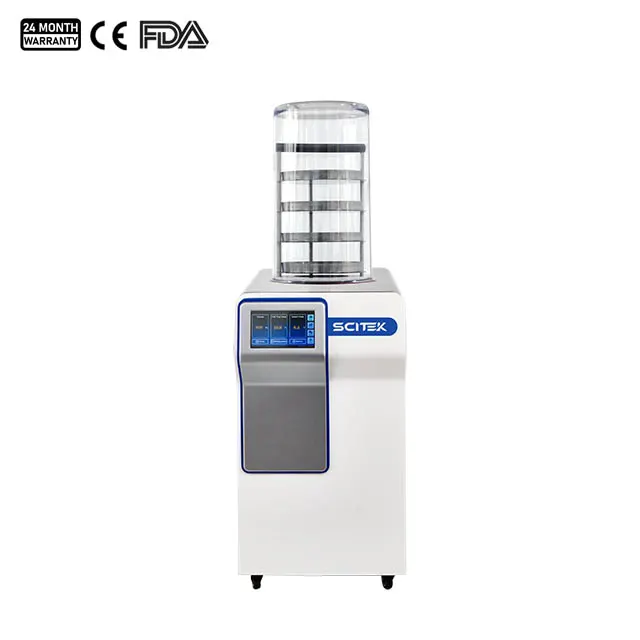
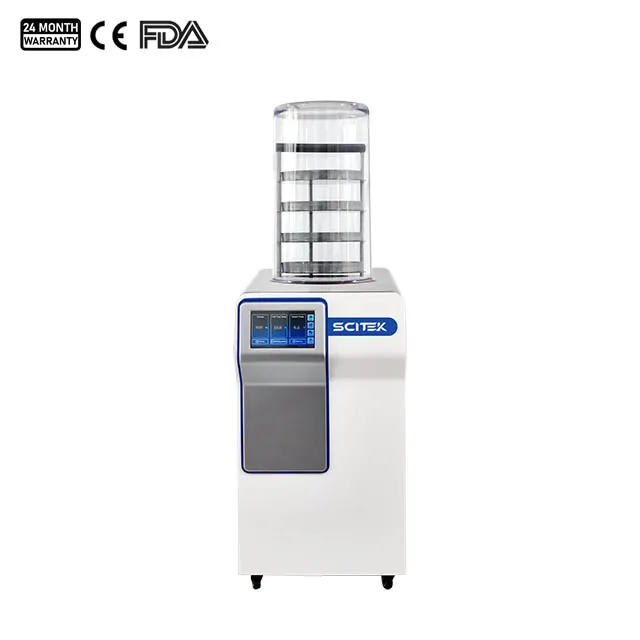
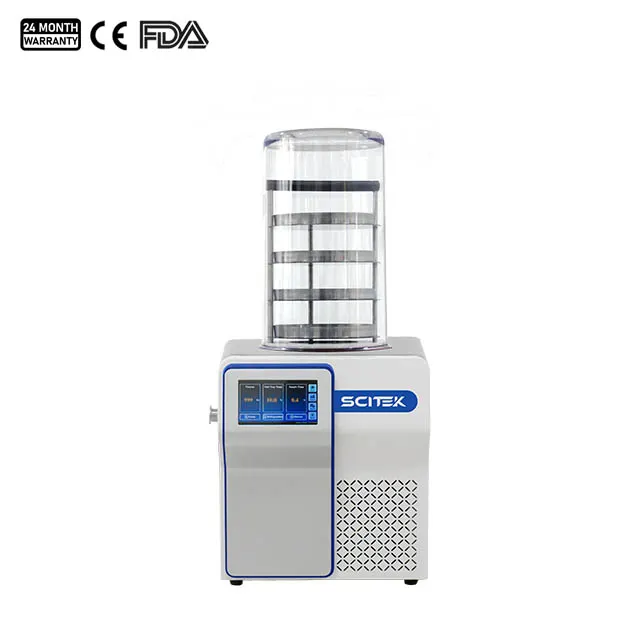
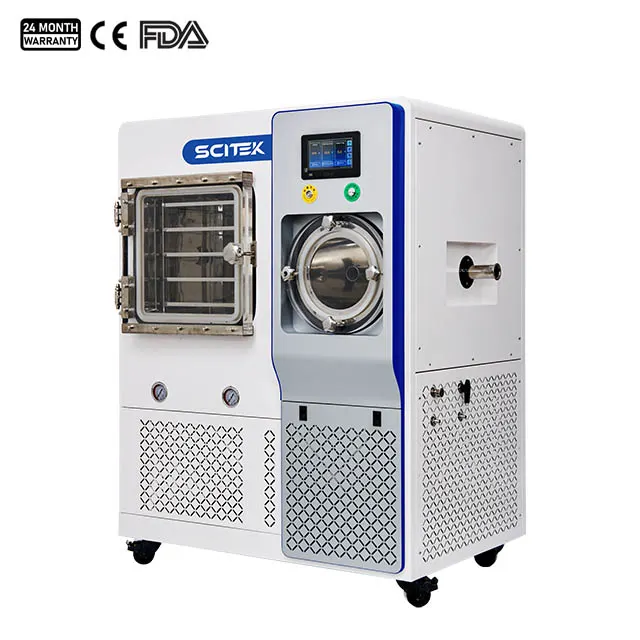
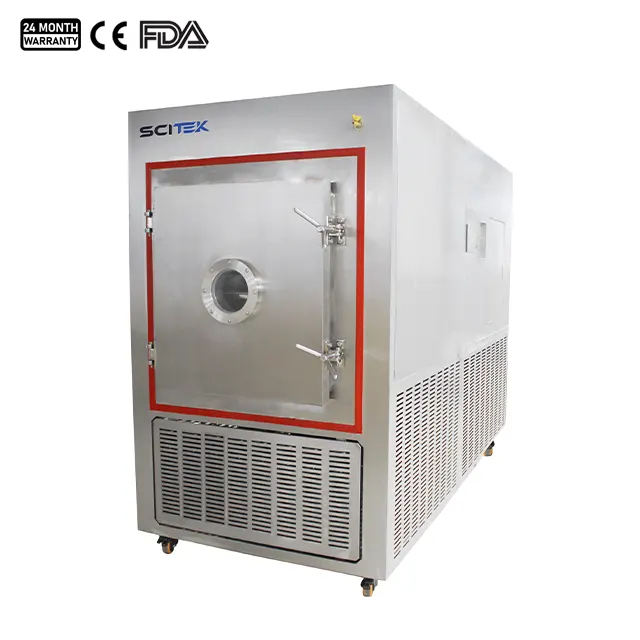
Freeze dryer (lyophilizer) for vacuum sublimation drying of biological and pharmaceutical samples.
Features:
Secop compressor (international brand) with hybrid refrigeration technology, ensuring low-temperature stability and environmental compliance.
7-inch color LCD touchscreen with user-friendly HMI, lock screen function, and optional remote control via PC/mobile.
Industrial-grade embedded OS with isolated power supply design (strong/weak current separation) for enhanced safety.
Auto-save function for freeze-drying parameters, supporting data review, export (USB), deletion, and anti-loss protection.
Transparent high-pressure corrosion-resistant PE chamber (460mm height, one-piece injection molding) for real-time material observation.
Stainless steel vacuum line with KF25 quick-connect clamp; corrosion and low-temperature resistant.
Vacuum pump delay start (activates below set temperature) to extend lifespan.
Real-time display of vacuum level, cold trap/material temperatures, and freeze-drying curves; supports multi-curve storage and USB data extraction.
Vacuum alarm, power-off auto-inflation (prevents moisture ingress), and inert gas filling port.
One-click auxiliary heating/defrost for rapid recovery.
Axial cooling fan with dual-ball imported bearings for ultra-stable operation and extended durability.
Magnetic maintenance panel for easy cleaning and dust management.
Automated reminders for pump oil replacement and system upkeep based on operational hours.
Biologics: Vaccines, antibodies, proteins, peptides, enzymes, hormones, and other highly temperature-sensitive active substances—freeze-drying is the gold standard process for maintaining their long-term activity.
Antibiotics: Such as penicillins and cephalosporins, which can address the issue of potency decline in humid and hot environments.
Diagnostic reagents: Products that require the preservation of activity, such as enzyme-linked immunosorbent assay (ELISA) kits and nucleic acid detection kits.
Freeze-drying stabilizes drugs at the molecular level through a dual mechanism of water removal and low-temperature processing:
Inhibiting hydrolysis reactions: Water serves as both a medium and a reactant in many degradation reactions. Freeze-drying reduces water content to 1%–3%, physically blocking chemical degradation pathways such as hydrolysis and oxidation, thereby preserving the drug’s chemical integrity.
Inhibits microbial growth: Extremely low water activity creates an environment where microorganisms cannot survive, preventing biological spoilage.
Protects heat-sensitive molecular structures: Processing at low temperatures throughout (typically below -40°C) prevents structural damage—such as protein denaturation and antibody inactivation—caused by high temperatures.
Forms a stable physical form: Freeze-drying produces a loose, porous, sponge-like “cake” with a large specific surface area and stable physicochemical properties, capable of maintaining efficacy for several years at room temperature.
Rapid Rehydration: The porous structure allows for complete rehydration within seconds upon contact with a solvent, restoring the original therapeutic efficacy.
Equipment Performance and Compliance: Do core parameters—such as cold trap temperature, shelf uniformity (temperature difference ≤ ±1°C), and vacuum level—meet standards? In the pharmaceutical sector, confirm that IQ/OQ/PQ validation documents are provided and comply with GMP/FDA requirements.