Purificateur d'eau désionisée, série WP-S (WP-S10D / WP-S20D / WP-S30D)

WP-S10D · WP-S20D · WP-S30D

Deionized Water Purifier, WP-S Series

Deionized water system up to 30 L/h, 10–16 MΩ·cm resistivity (Type I lab water), for laboratory, medical, electronics and pharmaceutical use.

Request a quote

Category: Laboratory equipment · Pure water production

Specifications by model

CharacteristicWP-S10DWP-S20DWP-S30D
Deionised water qualityRésistivité 10–16 MΩ·cm à 25 °C (> eau labo type I)Résistivité 10–16 MΩ·cm à 25 °C (> eau labo type I)Résistivité 10–16 MΩ·cm à 25 °C (> eau labo type I)
Water flow rate10 L/h (25 °C)20 L/h (25 °C)30 L/h (25 °C)
Working pressure0,1–0,5 MPa0,1–0,5 MPa0,1–0,5 MPa
Conductivity≤0,1 µS/cm≤0,1 µS/cm≤0,1 µS/cm
Ammonia / nitrate≤0,3 / ≤0,06 µg/mL≤0,3 / ≤0,06 µg/mL≤0,3 / ≤0,06 µg/mL
TDS (RO water)<10 ppm<10 ppm<10 ppm
OutputsRO water, deionised waterRO water, deionised waterRO water, deionised water
Power48 W48 W48 W
Power supply220 V, 50/60 Hz220 V, 50/60 Hz220 V, 50/60 Hz
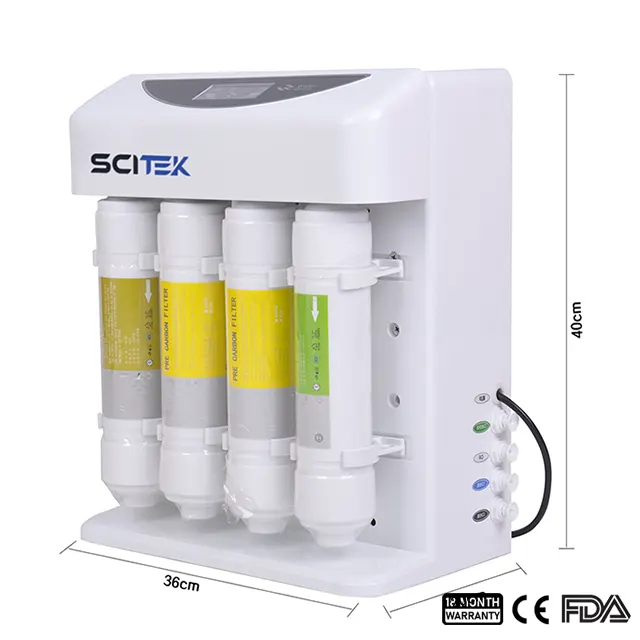
Dimensions (W×D×H) (mm)360×200×400360×200×400360×200×400
Net / gross weight (kg)15 / 2515 / 2515 / 25

Full description

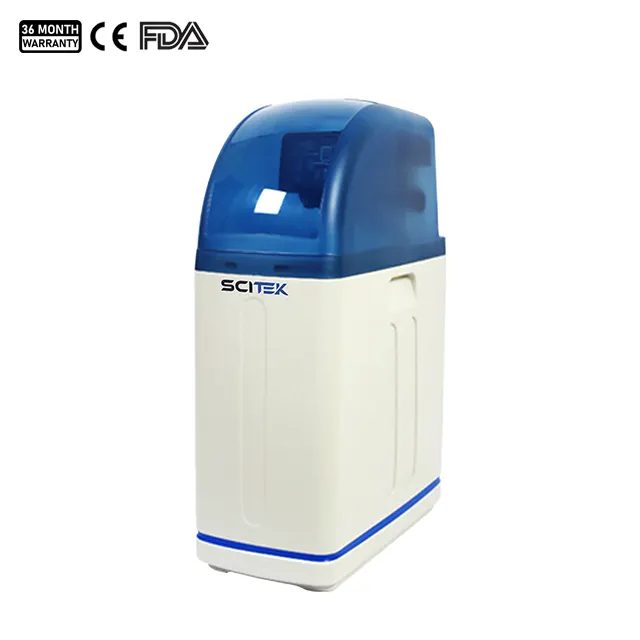
This deionized water system can treat water at a maximum rate of 30 L/h with high treatment efficiency. It is widely used in laboratories, medical treatment, electronic manufacturing, pharmaceuticals, etc. It removes ions and impurities from the water, providing pure water without minerals and pollution, ensuring high quality and reliability of experiments and production processes. Features: Swift-change filters enable effortless and user-friendly replacements. Exposed filter cartridge design ensures convenient consumable replacement. Microcomputer-based automatic control with a large LCD screen featuring backlight LED. Intuitive operational status visualization, displaying real-time functions such as flushing, water production, full/low levels, and maintenance; includes audible and visual alarms. Sleek transparent window and detachable panel for uncomplicated maintenance. Crafted from the latest eco-friendly materials and equipped with a portable testing pen. Stage One: PP Cotton Filter (5-micron Pore Size) Initial filtration of incoming water to eliminate larger particles, colloids, suspended solids, and other impurities. Stage Two: Granular Activated Carbon Efficiently adsorbs odor, color, organic substances, and heavy metals from the water. Stage Three: Compressed Activated Carbon Further eliminates residual chlorine, organic compounds, color, odor, and turbidity. Stage Four: RO Reverse Osmosis Membrane (0.0001 Micron Pore Size) Effectively removes viruses, heavy metals, and organic impurities from the water. Stage Five: Deionization Purification Tank Removes most heavy metals and trace elements, achieving the national laboratory water's first-grade standard. The deionised water filter features a white plastic housing with a smooth, clean finish. The above pictures detail the internal structure and various parts of the deionized water filtration system. They include the filter cartridge, inlet and outlet connection threads, sealing ring, bracket, etc. The purifier cartridge is made of high-precision resin, which effectively removes ionic impurities from the water. While both methods provide safe and clean water by removing solid particles and minerals from the water, distillation does not remove volatile chemicals such as chloramines as effectively as reverse osmosis. Distilled water is boiled to produce pure water that is free of contaminants and impurities such as chlorine and dissolved solids. Deionised water is water from which all dissolved mineral particles have been removed.

In the same family